
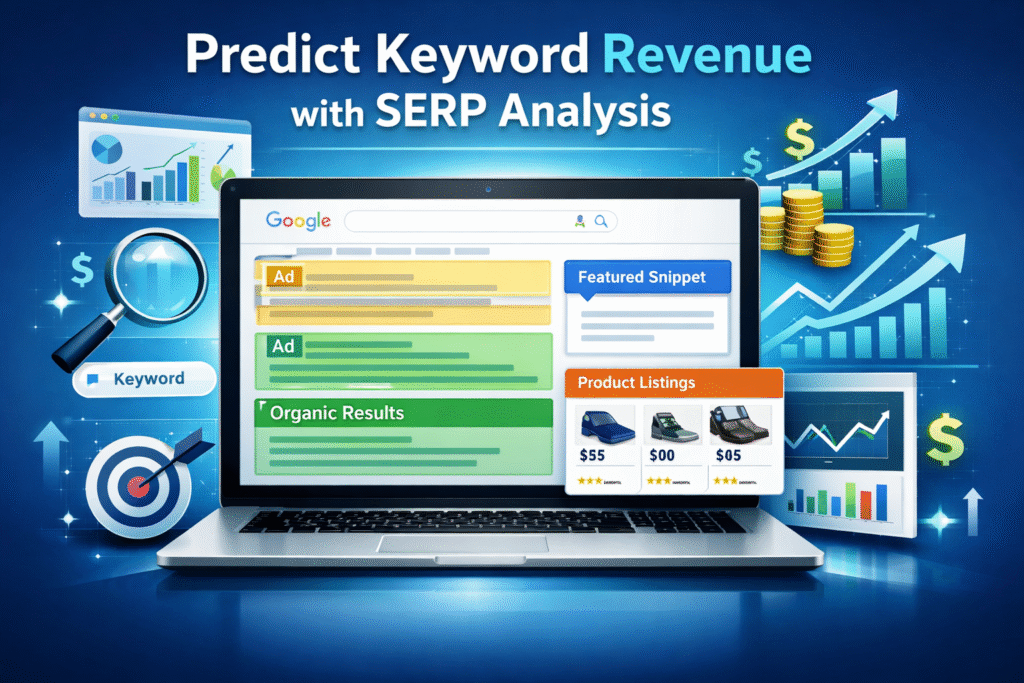
Choosing the right keywords is not just about traffic anymore. A keyword that brings thousands of visitors but no conversions is far less valuable than one that attracts a smaller, high-intent audience ready to buy. This is where SERP analysis becomes a powerful tool. By studying search engine results pages (SERPs), you can estimate the real revenue potential of a keyword before investing time and money into content creation.
What SERP Analysis Really Tells You
SERP analysis goes beyond keyword difficulty scores and search volume. It reveals search intent, commercial value, and competitive landscape—three critical factors that directly affect revenue.
When you search a keyword on Google, the results shown are Google’s interpretation of what users want. If the SERP is dominated by product pages, ads, and reviews, it signals strong commercial intent. If it’s filled with blog posts and guides, the intent is likely informational, which may require a longer monetization funnel.
Step 1: Identify Commercial Intent in the SERP
Start by typing your target keyword into Google and observe the page layout.
Look for:
- Google Ads at the top or bottom
- Shopping results
- Affiliate review articles
- Comparison posts (e.g., “best,” “top,” “vs”)
- Product or service landing pages
If advertisers are actively bidding on the keyword, it usually means there’s money to be made. High ad presence indicates that businesses are already converting traffic from this query, making it a strong signal of revenue potential.
Step 2: Analyze the Type of Ranking Content
Next, study the top 10 organic results.
Ask yourself:
- Are these blog posts or sales pages?
- Are they optimized for conversions?
- Do they promote products, services, or affiliate links?
If most top results are monetized pages (SaaS landing pages, ecommerce stores, or affiliate blogs), it means Google believes users are ready to take action. That’s a green flag for revenue.
On the other hand, if the SERP is dominated by definitions, tutorials, or Wikipedia-style content, the keyword may be better suited for brand awareness rather than direct income.
Step 3: Evaluate the Strength of the Competition
Revenue potential also depends on whether you can realistically compete.
Check:
- Domain authority of ranking sites
- Content depth and quality
- Use of visuals, tools, or original data
- Backlink profiles (if you use SEO tools)
If the SERP is filled with massive brands and highly optimized pages, ranking may take significant time and resources. However, if you see smaller blogs or outdated content ranking, it suggests an opportunity to capture traffic—and revenue—with better content.
Step 4: Look for Monetization Signals
High-revenue keywords usually show clear monetization pathways in the SERP.
Examples include:
- Pricing pages ranking organically
- “Best tools/software” lists
- Free trials or demo offers
- Strong calls to action
These elements indicate that users are not just browsing—they are evaluating options and preparing to spend money.
Step 5: Match SERP Intent With Your Business Model
Even if a keyword has high commercial intent, it must align with how you make money.
For example:
- Affiliate marketers should prioritize review-driven SERPs
- SaaS businesses benefit from keywords with demo or pricing pages
- Ecommerce sites should target product-focused SERPs
If your monetization method does not match what Google is ranking, conversions will suffer, no matter how much traffic you get.
Step 6: Estimate Revenue Potential, Not Just Traffic
Finally, combine all insights:
- Search volume
- Conversion intent
- Competition level
- Monetization alignment
A keyword with lower search volume but strong buyer intent often generates more revenue than a high-volume informational keyword. SERP analysis helps you spot these hidden opportunities before your competitors do.
Final Thoughts
SERP analysis turns keyword research into a revenue-focused strategy. By understanding user intent, commercial signals, and competitive dynamics, you can prioritize keywords that don’t just rank—but convert. Instead of chasing traffic for its own sake, you start building content that drives measurable business results.